Search This Blog

Pages

Tuesday, September 20, 2011

The Seven Subjects I learnt at Marwari Business School (MBS)


On the last day of my ICSE exam (10th standard finals), my Nani (Grand mother) offered me a free seat into the Marwari Business School. I was 16 and I had the opportunity to go and sit in my Nana’s (Grand father) office.
I took up the offer.

These are the seven subjects I learnt:

M = Monetization Mentality

Monetization above everything else!

Monetization above everything else!

For Marwari’s, money pretty much means everything.  It’s the ‘currency’ of success – pun intended. People are sized and measured not by their waist sizes but by the width of their balance sheet. A Marwari’s religion is making money and they meditate on it.
What Monetization and its terms means is also unique for Marwari’s.

For instance, I learnt that Revenue was not what you ‘bill’ or ‘pass-thru’ or ‘recognize’. Revenue was always what you ‘net-net’ earned that came in your coffers.
Revenue is bottom line for a Marwari – not top line.
Also, the facets of revenue became very clear to me. Every capital investment (be it land, or machine or even cars and computers) had a ‘monetization expectation’ attached to it. You could spend on things only if they made money. Hence ordering flowers for office tables in a typical Marwari office would be disallowed (despite the plea that they enhance profitability).
This ‘monetization mentality’ made me create what I believe was the most detailed costing breakup of any socks factory in the world. I took 3 years to ‘post mortem’ the cost of everything we incurred (whether real or notional in terms of interest lost) and link it back to revenues that were being earned. So, I could tell you that if you ran extra air-conditioning in the office building, then ‘X’ was the revenue that needed to be generated to make a PROFIT on that extra spend.
Also, I learnt that revenue was something to be always ‘improved’ – not just by price hikes alone. If collecting money from debtors were improved by 3 days, then there would ‘X’ reduction on bank overdrafts and hence extra income to the firm etc.

A = Accounting Archery

Have you tried accounting Archery?

Have you tried accounting Archery?


All successful Marwaris really know their accounting. Trial Balances, P&L statements and Balance sheets are the juiciest novels that a Marwari reads. What they clearly understand is the concept of ‘Capital’ & how Capital gets generated at the lowest cost and how that same Capital then needs to be exploited to the fullest.

‘Creativity’ in accounting was the highlight of what I learnt. I remember when I was 17, an uncle sent me to his Chartered Accountant (CA) to finalize and close my Uncle’s books. Like a good student, I prepared the P&L and presented it to Mr. CA, along with the ‘tax’ liability. He chuckled and then called up my Uncle in my presence on a speakerphone. I expected Mr. CA to tell my Uncle what I had prepared. Instead Mr. CA asked my Uncle ‘Babu (Sir), how much tax do you feel like paying this year’? My Uncle grudgingly muttered a number and that was the end of the call. Then Mr. CA took my P&L and completely re-crafted the numbers (and believe me legitimately) to perfectly match the tax outgo my Uncle wanted to pay!

R = Righteous Rigor.
Each month, there would be at least a couple of instances when a very old worker (you know the ones who look like grand dads) would hang out near the factory cashier with a couple of his relatives. At the right opportunity, the worker would gently knock on my fathers cabin door; enter nimbly; gently walk together my father and then bend down to touch his feet. The first time this happened I was stunned. I mean it was very demeaning to see such an old man behaving in such a subservient way. My dad of course would immediately stop the old man from bending further, do a ‘Namaste’ (fold hands) and greet the man. I would almost always notice the tears in the old worker’s eyes.
I learnt later that these workers had worked for 30 -35 years in our factory and this was the ‘D’ day they had withdrawn their Provident Fund account (saved in the factory for all those years) to be used for marrying their daughters or for buying a house etc. The amount they received was largely disproportionate to their monthly salary (lacs of rupees) and they solely relied on our Company to safeguard their moneys, banked safely for an important day.
If you have read how corrupt many companies have been with PF accounting and the fact that some of them have NOT even maintained accurate PF accounts and have squandered what was not their own money, you will realize how damaging this is . Imagine telling this 60-year-old worker on the eve of his daughter’s wedding that his fortune of 30 years will be paid ‘later’ (meaning never).
This taught me a lot. It taught me morals, ethics and righteousness and how to actually live up to others people’s TRUST that they have placed in us.
Most People are naïve and innocent and very trusting. We have to honor their faith in us.

W = Wait, Watch and Win
When I sauntered into my father’s factory on a bright Monday morning on my first day at work, I thought the world would be at my feet. In my mind I had a desk to myself, lots of papers and files, a huge telephone on my desk with lots of blinking lights (remember the EPABAX) and a constant stream of visitors to meet and greet me.
Quite the reverse of that happened.

Have you learnt how to Sit?

Have you learnt how to Sit?

When I entered my dad’s cabin, he pointed me to a rather uncomfortable looking ‘corner’ chair, and asked me to SIT. I remember his words so clearly even today. He said – ‘Alok, learn how to sit. If you can just master sitting, you will have learnt a lot’.
Grrrr…I was exasperated! I mean I was a rock star supposed to gyrate and prance all over the stage. Instead I was being locked inside the backstage changing room?
Slowly, the concept of ‘waiting and watching’ began to sink in.  For almost one year I sat like a flower vase on a pedestal in my dad’s cabin just watching him function.
I was not asked for an opinion and was even barely noticed! Being completely ignored became a normal emotion for me, and I spent the hours just learning.
And how I learnt! From everything about machines to finance to production planning to inventory management.
I guess the biggest lesson I learnt was that winning comes from waiting.
In the first seven years of starting contests2win.com (my first independent business), this ‘waiting’ training bore rich fruit. I became the expert at waiting outside client’s offices for hours just to meet them for  five minutes. Never once did I even feel bad or humiliated. I became best friends with these busybody’s personal assistants and secretaries and learnt a lot about the way their business functioned.  In fact, I even found a long-term partner in Rajiv Hiranandani while waiting for hours in the Shaw Wallace office in Mumbai! Rajiv was the head of sales of Yahoo at that time and after many ‘sofa’ meetings at Shaw Wallace, he agreed to head mobile2win India – a mobile business that I was just starting up then.
All good things in life take time. One has to learn to wait, watch and then win.

A = Attitude Adjustments.
Marwaris generally have little ego issues. We are trained to do business and not to pretend to be the Queen.
In 1994, my father and I traveled to Germany to attend a textile fair. That was one of the busiest fairs in the world, and all the hotel rooms were fully booked. My father and I were sharing one room.
In the hotel lobby, while eating breakfast we met one of the largest textile Barons of Hong Kong – who was a Marwari and had emigrated there many years ago. He was hugely successful and very well known globally.
While all of us were eating together, a rather disoriented looking man in a crumpled shirt and Hawaii slippers came across and stood next to Mr. Textile Baron. Mr. Baron smiled at him and excused himself and arranged breakfast etc for the man. Later he came back and explained that this man was the chief jobber (mechanic) in his Indian factory and had never traveled in a plane before or ever stayed in a hotel.  He did not know how to operate the bathtub shower. However he was the heart of the factory and Mr. Baron was sharing his room with him to make sure he was comfortable!
That trip I learnt a lot about attitudes, and how to adjust them to be a very successful entrepreneur.

R = Risk and Reward
About 4 years into having started the export division of my factory and having executed many successful orders, I was on top of the world. I guess I was enjoying the sweet ‘high’ of success.
Retrospectively put, I think I had become over confident.
As scheduled, I met my buyer from C&A (An erstwhile large European retail clothes store) in my factory showroom and began discussing new orders. My buyer winked at me, retrieved a bundle of socks from his bag and laid them on the table. The yarn color and texture of the socks caught me my surprise. This was that ‘heather mixture/grey flannel’ type color (like the t-shirts that look like a blended grey). My buyer said ‘Alok, this new yarn is a rage in the EU. I am happy to give you an order that will be 5 times larger what we have ever done with you – if you can ship your socks in this type of new yarn in various color tones’.
I asked him what this yarn was and he very casually said ‘oh, it’s a cotton mélange. All global socks manufacturers are working with the same yarn in their country; I’m sure you will find suppliers for it in India without a problem’.
I looked at him, and the socks and said ‘yeah, I’m doing it’.
What I never realized was that I had taken the biggest risk of my life. I also think that greed had blinded me. I could have agreed  for a trial order rather than one that was five times the usual size.
But I also learnt that what entrepreneurs do for a living is to leap without looking.
Once I received the order sheets, I began scouting the market for mélange yarn. None of my regular suppliers made that type of yarn. A couple of the suppliers in Hyderabad (the south of India) were large producers of Mélange, but their yarn composition was synthetic not cotton. Quickly I began to panic because I could not find a single yarn supplier of that yarn in India. What haunted me was that non-fulfillment of the socks orders meant severe penalties and a black listing to ever work with C&A.

Melange, Melange, Melange!

Melange, Melange, Melange!


Added to the problem was that I had accepted the orders in 5 different types of yarns.
The standard colour in Melange was grey and not ‘sky blue’ and ‘camel’.This order was looking like a train wreck for me.

After an agonizing search and hunt operation, the Hyderabad Company agreed to spin a special Cotton yarn for me in their regular 2/40’s count. (In cotton, the larger is the count, the finer is the yarn – so 40’s is good for garments and 200’s is what we wear in shirts. ‘s’ stands for single yarn). I actually wanted 20’s which is used for socks.
Now, 2/40 meant that 2 yarns of 40’s would be twisted together to make it as thick as 20’s (which is what I wanted), but the cost was double of what I was paying for 20’s yarn. So buying 2/40’s was a no go.
Finally, I convinced them to spin the yarn in 20’s (20 single count) and they sent me a few spools to test.
When I got the yarn and spun the socks, I had a heart attack. Because the yarn was mélange and a single thread (20’s), it was ‘twisting’ and ‘turning’ like a top and making the socks look like they were ‘wrung’ to death. The 2/40’s yarn would not have that problem because a ‘S’ twist and a ‘Y’ twist were spun together giving the combined yarn a ‘neutral’ spin – but as explained earlier, I could not afford that yarn!
When I explained my agony to the mill, they asked me to ‘heat’ the yarn via a specific process to ‘kill’ the spin. I did just that and enjoyed my second heart attack – the color of all the 5 yarns dramatically changed when ‘heated’.
In the end, I got a ‘duller’ 20’s custom cotton yarn made, got that yarn heated to kill its twist make it look like the original colour ordered and even ‘washed’ all socks to kill the little spin left behind. Because the washing was shrinking the socks, I had to redesign all socks specs in a way that after they were washed and shrunk, they came back to the original size the buyer had ordered!
I made my shipment just on time and that execution paved the way to tripling our exports in the next few years.  Interestingly, most of the orders that came in those next 7 years were mélange yarn orders.
I had learnt the very difficult lesson by taking on Risk; but more importantly managing risk carefully and with perseverance to make it rewarding.
In 1999, when I walked out of my factory doors to launch contests2win.com – I had no clue about the Internet or promotions or marketing. I just thought of my European socks buyer and chuckled. Intriguingly, that day I was wearing a pair of ‘mélange’ socks!
I = Innovative Ingenuity
When I pitched to my father that there was a massive opportunity to export plain white, navy and black socks to Europe but at ridiculously cheap prices, he took up the challenge and worked back to back with his technical team to ‘refit’ Indian knitting machines bought from Punjab to make socks worthy of European feet.
In essence, he innovated and created a sock that was the same in quality as a European sock, but knit from a machine that cost 1000$ in India vs. 20,000$ in Italy.
The trick that really mattered was treating the ‘Toe’ portion innovatively. In Italian socks, the toe was knit ‘within’ the machine and very finely, so that it did not cause discomfort to the consumer while wearing. In Indian sock machines, the toe portion came out unstitched; to be manually ‘sown’ over the open ends to close the toe. The process of sewing Indian socks caused a thick seam that always created discomfort while wearing the socks over the consumer’s toes.

Toes that look like 'Granny' finished!

Sock toes that are ‘Granny’ finished!


My dad fixed the problem by using an external machine to sew the thread into the Indian sock almost needle on needle (like granny’s knit sweaters) using a slow manual process that yielded a finish that was better than the Italian machine. Labour was cheap in India, and the outcome was perfect!

You can imagine how profitable the business became since we were getting paid for socks priced at EU costs whilst making them with Indian machines, yarn and labour.
This experience embossed the passion to reinvent in my mind. I have observed that there is a constant drive in all Marwari companies and entrepreneurs to ‘re-think’ business processes, concepts and change ‘this is how it is done’ to ‘this is how it can be done profitably’.
In 1998, after spending 7 years in the socks factory, I quit and started contests2win.com. The day I left the factory premises, I think I had graduated with merit from the Marwari Business School

KHP

Wednesday, August 17, 2011

India to Benefit from crude correction

After the political crises in Middle east the Brent crude traded above $125 which was a concern for further economic growth. After the recent financial crises where the worlds most powerful country USA was revised on its rating from AAA to AA+. The crude oil prices were eased and there is scope of crude oil prices falling in near future. Industries will benefit from this take, the operating cost of industries will fall and so the major chunk will be flashed in net profits. Also the inflation will come down and so there is scope of RBI revising n reducing interest rates. This prove a sigh of relief for UPA as the govt would claim on controlling inflation. The major variable at this juncture is fall in crude oil prices.  Also the Kharif output is reasonable enough due to sufficient monsoon which would also contribute to fall in inflation. But will these really pull down CPI inflation I think only khariff output will contribute but there is some scope of CPI reducing due to correction in crude oil prices.

KHP
ecomaniac


Thursday, August 11, 2011

Banking Terminologies -> mnemonics

Most of us find  it difficult to understand terms of the central banks. I do sometimes. so lets go with each of them.

Lending rates : Rate at which lender (holder) lends money to the borrower (issuer). Borrower is called issuer because he issues a collateral security against money borrowed. Now the lending rate wrt bank is called Prime lending rate (PLR).

Prime Lending rate : Prime means priority so PLR for bank is lending money at some rate to its priority customers.


Cash Reserve ratio : Cash reserve means amt of cash commercial bank has to reserve i.e. maintain with RBI. So RBI may increase CRR to drain excessive cash from commercial banks.

REPO rate & Reverse REPO rate: REPO in financial terms means "Repurchase agreement." Now repurchase of what since RBI and commercial banks deal in cash. RBI with respect to any commercial banks stays on the top most hierarchy. So REPO rate is cash from RBI to Commercial bank on which RBI charges some interest. Now we go reverse i.e cash transaction from commercial banks to RBI to which RBI pays some interest known as reverse repo rate since in reverse case RBI borrows money.


Statutory liquid ratio- SLR : Statutory means "Pertaining to" in case of statutory liquid it pertains to something related to liquid savings like Gold, Silver, Precious stones, Stocks etc those securities which can be converted into cash soon precisely called "Cash equivalents." Commercial banks have to maintain some percentage of cash equivalents with central bank (RBI) this is called SLR.

Shall blog few more later.

KHP
ecomaniac


Tuesday, August 9, 2011

Junk bond or Junk Bomb


Junk is something which deserves trash sooner or later just because its life is short to consume. Similar are Junk bonds the more you own and do not redeem till longer time higher is the default risk. Junk bonds offer 3-4 % more than government securities. The demand for Junk bonds is in rising economy but the yields are inversely proportional to economic growth but not in case of recession where the yields fall. Consider the case of USA where Junk bonds evolved in 1980 and increased 10 folds as more and more cos issued Junk bonds. However Junk bonds have increased economic growth in growth stage but during recession in 1990-91. Junk bonds turned to Junk bombs where most of the cos defaulted to repay the bond holder (lender).

Junk bond are tradable in India but the markets are small and not popular. But I am worried when the markets will grow. Say a company defaults in Junk bonds so the equity price of that company falls in the exchange where it is traded due to investors sentiments. This will increase the volatility in the markets.

These innovative financial products if not used in effective and efficient manner will hurt the economy. Just need an alert regulated system on this one. Efficient an d effective use would be boon for the nation.

KHP
ecomaniac 

Wednesday, June 1, 2011

Mother of all FEARS

With continuous  slowdown in economic growth in most of the sectors including mining, power, construction, etc due to continuous rising interest rates and poor fiscal policy  to curb the inflation demon has failed. The real worry is rising commodity prices caused due to speculation Eg : Silver traded in range of 50k - 75k in this quarter showing fluctuation of 50% and many such other commodities, as Micheal Douglas rightly said "The mother of all evil is speculation and leverage debt.", don't u think the govts fiscal policy stands responsible for all of this.


Rising operating cost has reduced the profits of the cos followed by the slowdown in economic growth is a worry for all of us. Rising fuel prices, I wish Mumbai should be Venice where in I could have bought a boat for myself, off course not a motor boat. It seems to me the growth stage is gradually migrating to decline sell your stocks if u hold any. 


What our fiscal policy can do is raise the rates more by 50bps and invite one more worry. I wish I could suggest some alternative to this. As of now when I close my eyes I hear the sound of worry winds (shhhvvvvvvv shhhvvvvvv u see) arriving in 2 yrs the next financial crises stands close just because the previous one was fixed by printing dollars as decided in G20 summit and the value of those printed notes have fallen with rising inflation,  and now we need to print few more triggered by financial crises. We need some innovation on this one hope we fix this Keynesian economics some day.


KHP
ecomaniac

Tuesday, March 15, 2011

Worry winds from Japan

Last week the catastrophe hit Japan the million dollar question "Will this affect the Indian economy?",still is unanswered or rather manipulated by the  most respected market speakers. The tsunami eroded the developed infrastructure. Don't you think this infrastructure was insured? and also few thousand people who were victims and faced death were insured. The insurance companies will have to negotiate on this and so have to sell their stake in market which they have invested in developing economies. I believe India stands one where Japanese firms had invested and are withdrawing their stake so we see SENSEX, NIFTY & NIKKEI moving down.

Any catastrophic event will hit the insurance companies first and will have an impact on markets leading to selling pressure so the stock indices will fall. How can we forget the Tsunami in Katrina in last decade and its effect on markets.

The fact is that analyzing those  historic events I concluded that it has similar effects on markets, crude oil, stock indices the only difference is Japan stands today and Katrina was the previous one.

Take a put call on NIFTY for this week.

KHP
Njoi making money 

Tuesday, March 1, 2011

Political crises and economic growth

2009 was the year of robust economic recovery followed by several scams in 2010. The economic recovery recovery carried inflation along with it and prices of several commodities climbed high.

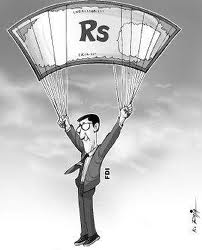
The Indian economy is facing inflation threats several attempts to capture this inflation demon has failed i.e. by increasing bank rates several times in past few quarters did not even work. The middle east political instability and war in Libya has affected Crude oil prices a major ingredient in industrial process the government in this budget is now proposing 100% FDI investment in multi brand retail to trap inflation but Pranab Babu is not aware that our's is the nation where people prefer consuming fresh vegetables Eg; Tomatoes the affordable price for a common man is Rs. 20 per kg  instead of buying a tomato puree available at a similar price form a retail store. So promoting 100% FDI investment in multi brand retail chain where we get hybrid stored vegetables at lower prices will not make much impact on inflation.

Oil subsidy may make some impact on on inflation provided middle east issues are resolved but if not resolved the prices of crude oil will rise and industries will have to spend more on their transportation expenses since prices of petrol and diesel will rise so this will trigger rise in prices of products and again the inflation wins over several strategies to trap it.

The fact is our economy is moving from growth and recovery stage to boom stage where prices of every thing will rise be it real estate or gold, silver, stocks and other assets. The boom period starts for Nov 2011 and will last till the economic bubble can inflate.

Conclusion inflation will continue to rise irrespective of all measures to trap it and there will be opening for the bond market which is the safest investment in boom to burst phase.

KHP  

Saturday, February 5, 2011

FINANCIAL NEWS TODAY


1.       Rise in brent crude oil prices which might impact the industrial consumption, so a threat for developing economies like India.
2.       Sexsex fell flat approx 413 points down on account of Egypt crises,  rise in bank rates and rising inflation @ 16%.
3.       US unemployment rate fell to 9% shows rising sign as far as US economy is concerned it fell after approx 2 yrs.
4.       Gold prices to rise on account of inflation.
5.       RBI will increase bank rates for few more quarters – PM Manmohan singh

Remember prices of crude oil rise in case of crises in Arab countries, corrosion in trans Atlantic pipeline (which carries crude oil). Crude oil is used as an industrial commodity any sudden rise in price will affect cost of input for the companies and so will affect the profits (low profits). Also the prices or Petrol will rise in few weeks.

KULDEEP. P 

Sunday, January 16, 2011

Now investments in Indian stocks for Long term


  • Foreign investments (FII, FDI) have made high returns from investments in Indian companies.
  • USA which was in recessionary pressure till 2010 have now manged to move out of recession and so foreign investors who had invested in Indian cos will now withdraw investments and invest in US cos.
  • This is how FII withdrew investments form Indian cos few weeks back and Sensex made a bottom of 18900 aprrox from 20000.
  • Do this investors find a better investment scope in US cos, Yes because their stocks were undervalued till now and so can expect higher returns than investment in Indian cos.
  •  Also India is facing high inflationary pressure so the prices of raw materials will rise and that is a threat to manufacturing sector as they have to pay more for raw materials and also control the cost price of the product in the mkt, So what happens they have to compromise on profit margins.  and so the scope of returns on stocks of these cos reduces.
  • This is the correct time to remove all your investments from stock mkts.
  • FII & FDI never invest for long term they are always short term money makers because they are concerned about the world economy as a whole where they find more opportunities for better returns.
  • India will grow for long term but Chinese economy seems a threat in 2011.

Thursday, January 13, 2011

MFI's on extinction

  • MFI  are those who lend money to borrowers who are into small business. These are village women’s, farmers etc   for small business.
  • Now these borrowers have failed to pay the interest amt since few months and also the repayment of principle amount is not seen.
  • Since Oct 2010 MFI have been seeing a shortfall in interest income and cash. That was the first hit, now Jan 2011 i.e. the next quarter MFI will face the new hit: provisioning for bad loans.
  • This happened because borrowers went on borrowing to pay previous loans and so borrowers were left with multiple loans now they know that they are not able to repay, also they were not allowed to take further debt from MFI and have stop paying previous debts.
  • So whose at the loss finally, the MFI’s.
  • Can some go and insure these debts or bail out them, No this will not happen because nobody will buy such toxic assets.
  • So MFI’s are to extinction they include – Spandana Spoorthy Financial, Micro credit ratings, Trident micro fin, Star Microfin service etc.
  • Whose going to get affected the most after collapse of MFI they are banks who get affected the most because banks have lended Rs. 20,000 Cr to MFI’s this collapse of MFI’s shall bring a small downturn in SENSEX because the banking sector will get affected the most

Tuesday, January 11, 2011

Gold to rise this quarter


  • PE firms to exit investments this quarter
  • Food inflation soaring to 18% approx and yet to rise the reason being bad kharif output due to uncertain rains in oct & nov can govt really control inflation pressure no how can thay they can only console.
  • Since bad kharif output the food inflation is expected to rise to approx 24% and india will have to import food items.
  • So govt will have to sell Rs and buy $ to pay for trade this will create demand for $ and so $ will appreciate.
  • Since prices of commodities are rising due to inflation gold 7 silver being safest hedge against inflation prices of precious metals will also rise gold seen sm where around $ 1450 an ounce (Rs 22K per 10gms) silver to cross Rs. 55K per kg.Also the IIP nos worried investors in mkt so they shall shift to investment in precious metals and so demand increases and prices will rise.
  • Crude to hit $ 110 in few quarters.
KULDEEP
njoi makin mone

Wednesday, November 17, 2010

Innovation on Rural Banking

India is an agricultural based economy which had around 40% of contribution to GDP in 1995 and has slowed to 17.4% of contribution in 2010. This concludes that agriculture contribution towards GDP is decreasing gradually if this continues then we are soon to face food crises with coming years. The reason for decline in agricultural activities is rapid urbanization, globalization & infrastructure growth. Even the food grains harvested are not stored properly which leads to heavy losses India reported losses around Rs. 600 Cr in 2010. Agricultural sector is dependent on the climatic conditions.

Banks should take an initiative to provide microfinance & microcredit to agricultural sector and fund farmers through intermediaries. The job of the intermediaries is to keep record of all the transaction done by the farmer related to agricultural activities and to collect maximum possible evidence of the transactions and allocate funds to farmers accordingly.

Now the funds are allocated to farmer, farmer cultivates the crop uses latest technologies, fertilizers and does all possible activities to improve the harvest and the output is crops or better quality & quantity with the profits earned farmer can repay his debt. The job of the intermediaries is to monitor the harvest keep records of it and make sure farmer repays the debt provide he earns profits. Now everything goes well until famers borrow, improve harvest pay debts regularly and make some profits.

Now as mentioned agricultural sector being very much dependent on climatic conditions. During uncertain natural calamities such as heavy rains or draught the quality & quantity of harvest will deteriorate. This will affect profits of farmer’s which will lead to farmers not paying their debts and collapse of both the banking system and agriculture sector. To avoid this situation the harvest of the farmer should be insured. The insurance company should pay the debts on behalf of the farmer to the lender (microfinance or microcredit institutions). So this is a win-win situation both for lenders (microfinance or microcredit institutions / banks) and borrowers (farmers).

Now the question is how will the insurance company manage to pay the lenders (microfinance or microcredit institutions / banks) in case the borrowers (farmers) go default. The insurance company should appoint a fund manager whose job is the manage funds collected as premium from the borrowers and should be responsible to repay the debt of the borrower in case of default. It can be done this way the fund manager should trade and take positions in trading rainfall, trading commodities through commodities exchange.

The biggest loophole of this idea is the fund manager should be capable enough to take accurate trade decisions . The reliability of this idea is dependent on the fund manager. The fund manager should
take reasonable decisions depending on the statistical data available and through analytical skills.

Tuesday, November 16, 2010

Rupees to Depriciate

Sensex touched 21K many times but could not  make a new high and then started consistently declining.
 

FII's are pulling off money from markets, commodities also moving in reverse what this concludes.


FII's are selling rupees and buying dollars. So demand of dollars will rise in the market dollar will appreciate against rupees. as of now dollars are trading around Rs. 44. I see dollars reaching Rs. 46. so buy dollars till sensex slopes down to 18K approx. Strong support seen at 18K for sensex and  Nifty at 5600.

Njoi makin money

Kuldeep P
making love with eco & fin

Tuesday, October 19, 2010

FDI inflows in India

The FDI inflows in India has been increasing and the government has initialised the second generation reforms (after 1991 initiative) that allowed FDI on large scale. The limit has been extended to $ 20 billion by the finance ministry so far funds about $ 10 billion has been invested and the major chunk is in retail sector.
FDI is recognised an important driver for economic growth and  made Sensex kiss 20000 (approx) in a short duration. But this is what is worrying me unless and until the government & corporates utilize these funds in safe bets or ventures the economy is safe.

Now FDI has invested with some lock in period and the true number of yrs for lock in period is never disclosed as per policies. Why does any investor has lock in period the answer is he can redeem his investment and profits (interest earned) after few years, in short they are here to invest and withdraw their stake at the later stage when they need them back.

When the demand for services and goods manufactured in India reaches a saturation point the demand falls gradually. The fall is identified by large industries and they gradually reduce the production decrease the stakes. This is the point where I see Sensex at 26000 - 27000 few yrs from now and rupee appreciates at Rs. 41 /-  (approx) against $ (this is demand for $).

Now the panic starts spreading amongst medium, small producers, investors, creditors and so they start liquidating suddenly demand of rupees is seen in the market every stakeholder at this juncture is liquidating which pulls Sensex down.

All this brings recession along, people are jobless, no demand seen in market.

Then FII's (Foreign institutional investors) start investing in the economy create demand and pull the country out of recession suddenly demand of $ arises rupee depreciates and the figure of Rs. 49 /- (approx) is seen again.

China with its real estate bubble should lead to recession some time in 2015-2016. The rate at which it has grown since few years shall find hardly any nation to bailout.

Be prepare for the recession in 2015-2016 dont worry that is the correct time to invest in socks since they would be cheaply available and expected returns are 500% over later few yrs.

Golden rule says "Buy cheap  & Sell high"

Njoy making money.

KHP
makin love with eco & fin inv

Thursday, October 14, 2010

China's real estate bubble

Getting commodities out of the ground, building empty shopping malls, ghost towns, and bridges to nowhere requires a lot of equipment. Industrial goods companies benefited tremendously from Chinese demand. In the past, those were very cyclical companies, and it seems like this time they almost didn’t have a normal cycle. They declined but then came back very fast because the demand came back very fast, and a lot of that demand came from China.

Now what are the consequences of this. Spending large amt of cash on building this assets which are not utilized effectively will lead to property bubble. now with the bubble burst the property rates fall and so the value of the initial investment starts diminishing weakening the economy.

Will this make China to pass the point of no return. Well I bet 50% on that (considering the historic collapse of other economic giants). But what if China manages to survive it will force to create new economic principles.

Kuldeep H. P
Making love with eco & fin

Thursday, October 7, 2010

China’s currency manipulation: Flipping off America

  China is disrespecting America.
The Asian giant is an international trade outlaw, and U.S. manufacturers and workers are its crime victims.
China illegally subsidizes its export industries and unlawfully manipulates its currency. That kills U.S. industry and destroys U.S. jobs. Earlier this year, the Obama administration asked China nicely to allow its currency value to float up naturally on international markets. On June 19, China said it would.
And then it didn’t.
That’s flipping the bird at America.
Before China’s June 19 promise, bipartisan groups of lawmakers in the U.S. House and Senate proposed legislation that would force the U.S. Treasury Department to even the score and to call China out for what it is: a currency manipulator. Hearings on the bills are being conducted this week.
Pass the legislation. It’s time for America to flip the bird back.
Negotiation and threats have failed to produce a sustained, substantial currency float by China. Now, the Chinese currency, the renminbi, is undervalued by as much as 40 percent, a figure accepted by conservatives like C. Fred Bergsten of the Peterson Institute for International Economics. Even the International Monetary Fund managing director said the currency is undervalued.


China simply denied it. In March, the Chinese premier, Wen Jiabao, said he did not believe the renminbi was undervalued. That’s flipping off the world.
It works like this: China prints renminbi to buy billions of U.S. dollars, which makes them appear more desired and valuable, and the renminbi, by contrast, less valuable. That undervaluation of the renminbi acts as a subsidy for Chinese exports, artificially making them as much as 40 percent cheaper when sold in the U.S. Conversely, it acts as a tax of as much as 40 percent on American-made goods sold in China.

This dynamic contributed significantly to the rise of manufacturing in China. Earlier this year, China surged past Japan to become the world’s second-largest economy. And it contributes significantly to America’s massive trade deficit. The gap in July was $42.8 billion, more than half of which -- $25.9 billion -- was a result of trade with one country – China.

China’s rapid economic growth has ended poverty for millions of its workers. Here in the United States, however, China’s flouting of international trade law is destroying the lives of millions of workers. The Economic Policy Institute estimates that 2.4 million American jobs have been lost or displaced since 2001 as a result of the trade deficit with China. American workers celebrate their Chinese counterparts’ improved quality of life, but they condemn the government of China for accomplishing that with beggar-thy-neighbor trade practices.

Earlier this year, it briefly looked like threats would prompt China to act. In March, a bipartisan coalition of U.S. Senators introduced legislation specifying the factors necessary to label a country as a currency manipulator and detailing American reprisals. And in April, the Treasury Department delayed its report identifying countries that manipulate currency rates, suggesting that it was ready to take on China.

China appeared to respond to that pressure in June. It announced it would allow the renminbi to float toward its real value on the open market. The Treasury Department backed off, omitting China from its list of currency manipulators in July.

China then permitted the value of the renminbi to rise less than one percent. One percent. When it’s as much as 40 percent undervalued. That’s flipping the bird at America. Big time.
Still, America didn’t react.
On Aug. 25, the Commerce Department announced 14 new measures to crack down on trade violations such as ending certain exemptions from duties.
It did not, however, mention currency manipulation.
Dan DiMicco, CEO at Nucor Corp., the largest U.S. steelmaker, said the 14 measures are important, but the problem with China won’t be resolved until the United States takes on currency undervaluation. Here’s what he said:
“As long as we continue to let them get away with it, they’ll keep doing it.”
Six days later, in a trade case filed by the U.S. Aluminum Extrusions Fair Trade Committee, a coalition of domestic manufacturers of aluminum extrusions and the USW, the Commerce Department again squirmed out of dealing with currency manipulation.
Commerce imposed import duties on Chinese aluminum companies because China unfairly subsidized $514 million in aluminum exports to the U.S. in 2009. But Commerce refused to investigate the Fair Trade Committee’s evidence that China’s currency manipulation functions as an additional illegal export subsidy.


Sen. Chuck Schumer of New York, a sponsor of currency manipulation legislation, said afterward:
“The Commerce Department made its finding while still managing to ignore the elephant in the room, which is China’s currency manipulation.”
Commerce and Treasury have decided the proper response to China flipping off America is averting their eyes. See no evil.
Yesterday Japan followed China’s lead. It bought dollars and sold yen, decreasing the value of yen and increasing the value of dollars. This, the New York Times explained, was “a bid to protect its export-led economy.” That’s exactly what China is doing.
It’s a very public show of contempt for international regulations and for American citizens.
Normally, Americans don’t respond passively to contempt. Be normal, America.

Wednesday, October 6, 2010

FINANCIAL ANALYSIS OF BEAUTY


A young and pretty lady posted this on a popular forum:

Title: What should I do to marry a rich guy?


I'm going to be honest of what I'm going to say here. I'm 25 this year. I'm very pretty, have style and good taste. I wish to marry a guy with $500k annual salary or above. You might say that I'm greedy, but an annual salary of $1M is considered only as middle class in New York. My requirement is not high. Is there anyone in this forum who has an income of $500k annual salary? Are you all married? I wanted to ask: what should I do to marry rich persons like you? Among those I've dated, the richest is $250k annual income, and it seems that this is my upper limit. If someone is going to move into high cost residential area on the west of New York City Garden (?), $250k annual income is not enough.


I'm here humbly to ask a few questions:

1) Where do most rich bachelors hang out? (Please list down the names and addresses of bars, restaurant, and gym)

2) Which age group should I target?

3) Why most wives of the riches is only average-looking? I've met a few girls who don't have looks and are not interesting, but they are able to marry rich guys

4) How do you decide who can be your wife, and who can only be your girlfriend? (My target now is to get married)


Ms. Pretty


Here's a reply from a Wall Street Financial guy:


Dear Ms. Pretty,


I have read your post with great interest. Guess there are lots of girls out there who have similar questions like yours. Please allow me to analyze your situation as a professional investor. My annual income is more than $500k, which meets your requirement, so I hope everyone believes that I'm not wasting time here. From the standpoint of a business person, it is a bad decision to marry you. The answer is very simple, so let me explain. Put the details aside, what you're trying to do is an exchange of "beauty" and "money": Person A provides beauty, and Person B pays for it, fair and square. However, there's a deadly problem here, your beauty will fade, but my money will not be gone without any good reason. The fact is, my income might increase from year to year, but you can't be prettier year after year. Hence from the viewpoint of economics, I am an appreciation asset, and you are a depreciation asset. It's not just normal depreciation, but exponential depreciation. If that is your only asset, your value will be much worried 10 years later.


By the terms we use in Wall Street, every trading has a position, dating with you is also a "trading position". If the trade value dropped we will sell it and it is not a good idea to keep it for long term – same goes with the marriage that you wanted. It might be cruel to say this, but in order to make a wiser decision any assets with great depreciation value will be sold or "leased". Anyone with over $500k annual income is not a fool; we would only date you, but will not marry you. I would advice that you forget looking for any clues to marry a rich guy. And by the way, you could make yourself to become a rich person with $500k annual income. This has better chance than finding a rich fool.


Hope this reply helps. If you are interested in "leasing" services, do contact me…

Thursday, September 30, 2010

India's Democracy a hampering factor

Is democracy the hampering factor depriving India from the growth?


Yes, though we take wise decisions. Well taking decisions wont make a difference but the implementation will. So when it comes to the implementation before which we have large chain of ministries to agree with it in the parliament and when the implementation is about to initiate the government changes.

So the instability in governing bodies is the actual hampering factor affecting growth without which we have the potential to achieve double digit growth rate. These factors are disliked by most of the foreign investors affecting the young and dynamic entrepreneurs of our nation which are the boosters to double digit growth rate.

This is not with another Asian economic giant China where we have one government taking one wise decision implementing it and moving to next one. They do not have to go with large chain of formalities.

Now are we of more potential then China I believe yes we are because we are moving at same growth rate of 9% since few years and can manage in democratic and slow governing bodies.

Eradication of democracy will lead India to super power by 2050  as predicted India & China will contribute to 45% of worlds GDP. But the question is who shall hold a major share.

Kuldeep P
Making love with Economics & Fin

China's art of escape velocity

As we know 200 yrs of economic wisdom proved that the more your country borrows the sooner your economy will crash. And so we have been predicting China’s economic crash since long it has been borrowing funds on large scale and used them for infrastructure development
Infrastructure development includes building malls, tunnels, skyscrapers, roads, highways, ports, schools , hospitals etc . But how can we forget that Chins has equally built factories which produces goods consumed on the large scale by the rest of the world. It is true that economy of great nations Japan. US, Dubai, Europe collapsed on heavy borrowing and funding infrastructure growth. They how is it possible for China to survive what is the difference with other economies
As we know China is more on manufacturing goods and makes good foreign surplus and investing 50% on its GDP. Yes now this is how it is different from other nations it built factories as well with other infrastructure developments. Whereas other nations had asset bubble because they were concentrating more on private asset development. China is equally on private asset as well as social asset development.
Social assets empowers people of the nation contributing more to economic growth in real sense instead of only borrowing and developing private infrastructure.
Of all this if seems that China have managed to defeat 200 yrs of economic wisdom.

Kuldeep P
Making love for Economics & Fin

Sunday, May 9, 2010

Money changing hands

Over the past decade Greek authorities borrowed heavily to fund government spending and deficits leaving the country with debt exceeding its GDP and needs to borrow 13 % of its GDP to repay its debt.


The Greek government wants to implement following policies to repay the debt by 2012.
  • Freeze public sector pay
  • Increase tax & price of goods.
  • Raise retirement age from 60 to 63 hence will lead to delayed pension payouts.
In short the suffering is for civilians. So the civilians are accountable to these crises. Before theses crises there was lot in news about Goldman Sachs mortgage manipulation.


The Dept & GDP ratio which is crippling the country was the same situation back in the year 2000. Why was it not reported that the Goldman Sachs acts conjunction with the government hits billions & billions of debts. Bankers like Goldman Sachs 7 Wall street colliding with Greek government to falsify the data. Then to rectify the problem Greek government is sending their intelligence agency  to investigate whats going on and the hard reform Goldman Sachs to head up the particular investigation sot he government is being captive by the corrupt bankers and Wall St and blaming themselves for the debt and asking citizens to be accountable for the debt by raising taxes.


Goldman Sachs paid less than 1% of taxes last year and also stands responsible for Greek crises by manipulating mortgage funds it also paid large bonuses to ts employee's in Christmas. This shows that government is corrupt.
Manipulation by i- banks have often lead to crises for which civilians are made responsible on large scale. The financial system needs to be transparent to avoid such crises. 

Monday, May 3, 2010

Be Sure about Rupee appreciation

The recent declaration of Warren Buffet about his visit to India in March 2011 regarding his investment plans in the India would be the prime reason for appreciation of rupee in future. Since Buffet is holding his assets in Dollars and would certainly not like his investments being depreciated due to depreciation of Dollars, off course no investor would like that.

So what strategy has Buffet adopted?, the answer is to invest in the growing economies (China, India..... ). About Buffet holdings in China, it holds 9.95 stake in Chinese auto maker company BYD and many such large stakes. India is the next destiny of investment after Sep-2011 and will also force other such investors to pump their money in Indian economy. 

The calculation of investors is simple a 50 % (per annum) growth in Indian economy will stand profit whereas a 15% (per annum) decline in depreciation of Dollars or other currency stands a loss. What they would be left is with 35% Nett profit (per annum) on this trade. The point where they will pull the money back from India is when they will find that % growth of economy is equal to % of deprecation of currency because such trade will lead to neither loss nor profit.   Investors always prefer to invest in rising economies since the assets are cheap at an initial stage. This will appreciate Rupee because to buy Indian assets they will sell dollar in exchange of a Rupees. 

Even after growth of two Asian giants India & China, USA stands ahead because the profit will certainly be deployed in buying the Dollar assets again because they would be cheap after appreciation of Rupee so always buy dollars when cheaply available. 

A golden rule says "Always buy assets when cheap and sell when when they are  at high prices." 

Enjoy making money......

Kuldeep H. P
Making love for Economics & Financial Analysis
pitrodakuldeep@gmail.com    

Sunday, May 2, 2010

Collapse of Banking System

Banks are the medium of exchanging money. Depositors deposit money in the bank and charge interest rates for their deposits where as banks lend money in the form of loan and charge interest. So the system will only function if interest rate on money deposited is less than interest rate over the loan amount. The banks make money in this gap and so are called money creators.

Profits of Bank = Total revenue - Total cost

So it is clear that if total cost goes up i.e. the number of depositors increases than the number of money lenders the system goes wrong. What makes no of depositors increase in the bank which making the system wrong the answer is rise in inflation.

Rise in inflation is fewer money chasing less goods i.e the prices of goods rise due to shortage of demand which decreases the buying power and since the savings of  people increases the money is then deposited in the bank to get the interest. Banks on the other hand has less number of borrowers so the amount of money lending decreases and hence the interest collected is less which increases the total cost of the bank thus decreasing the Profits which might be loss even on the long run leading to collapse of banking system(Eg : Lehman Brothers), leading to recession.

Now in recession banks themselves lend money to large institutions at high interest rates through investment banking system making huge profits and hence recovering previous losses. Them till the time of recovery there is enough money flowing in the economy which increases demand as well as supply where aggregate demand is same as aggregate supply (in Recovery stage). The banks now has enough borrowers and the cycle continues until next collapse.

Concluded the recession stands an opportunity in span of every 7-9 yrs.

Kuldeep H. P
Making love for Economics & Financial Analysis
pitrodakuldeep@gmail.com

Depreciation of US Dollars


The depreciation of currency is due to various economic factors and cant be manipulated by other foreign nations as claimed government of USA.

Since many years with the start of Bush era (2001) USA is running large trade deficits and the Iraq war was the main reason for large government expenses in US military leading to budget deficits and further trade deficits. Trade deficits because foreign countries (China & Japan etc) contributed to large inflows in USA in exchange of US treasuries.

The Debt to GDP ratio increased further since 2003 and was about 0.4 i.e about 40%. Obama government introduced mediclaim & mediaid bills in 2010 and it is predicted that this bill will have large contribution of government expenses and so will rise the government expenses and US dept is predicted at about 53 trillorn dollars in 2014 leading to large trade deficit and depreciation of US dollars.

 Predicted Debt to GDP ratio
2050 - 100% (the worst situation happened during World war II)
2070 - 200%

Rise in debt will cause large trade deficits and depreciaiton of US dollars. The question is how would other countries get affected with rise in trade deficits of USA, the answer is as simple as the next currency bubble is surrounding China.

China is buying Gold and hedgeing with deppreciation in US Dollars and so the price of gold will rise till then. But there is always a saturation point for rise in gold prices where other investors will sell Gold due to fall in supply. 

So never buy Gold after it crosses $1600 an ounce because it would be forced to fall from this level.

Kuldeep H. P
Making love for Economics & Financial Analysis